Welcome to the Easy Dish!

What to Eat When You’re Broke, Busy, and Exhausted (Without Giving Up on Healthy Eating)
Struggling to eat healthy when money and time are tight? Learn what to eat when you’re broke, busy, and exhausted — with realistic tips and simple comfort-food meals.
1/11/20263 min read
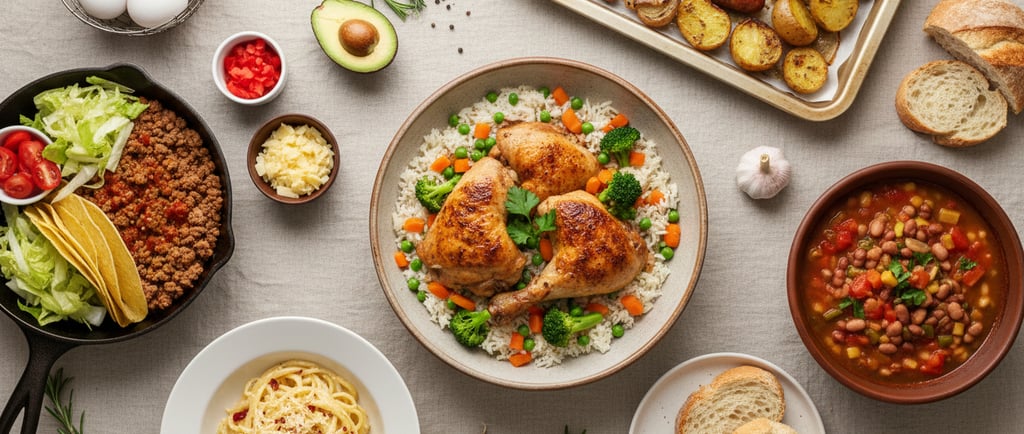
There’s a specific kind of exhaustion that hits when you’re hungry, short on time, and worried about money.
You open the fridge.
You close the fridge.
You think about cooking… and immediately feel overwhelmed.
Eating healthy sounds nice in theory, but when groceries are expensive and energy is low, it can feel completely unrealistic.
If this sounds familiar, you’re not lazy — you’re responding to a very real combination of time pressure, financial stress, and decision fatigue. And the good news is this: you don’t need a perfect meal plan or gourmet recipes to eat well during seasons like this.
You need simplicity, familiarity, and flexibility.
This article will walk you through:
Why food feels so hard when you’re broke and busy
What actually helps (and what doesn’t)
A realistic way to approach meals without burnout
How to make healthy eating doable again
Why Eating Feels So Hard Right Now
If you feel like feeding yourself has become harder over the past few years, you’re not imagining it.
Grocery prices are higher
Budget-friendly staples don’t stretch the way they used to, and “cheap” meals often don’t feel cheap anymore.
Time is limited
Between work, family responsibilities, and mental exhaustion, cooking every night feels like too much.
Decision fatigue is real
When you have to decide what to eat three times a day, every day, those decisions pile up — especially when money is tight.
Most traditional meal plans fail because they ignore these realities. They assume:
Unlimited energy
Plenty of time
Motivation to cook constantly
Real life doesn’t work that way.
The Biggest Myth About Healthy Eating
One of the most damaging myths around food is that healthy eating requires:
Fancy ingredients
Long prep times
Perfect consistency
In reality, healthy eating during stressful seasons looks different.
Sometimes it means:
Repeating the same meals
Using frozen or canned foods
Choosing convenience over creativity
Letting “good enough” be enough
And that’s not failure — it’s sustainability.
Focus on Dinners First (This Changes Everything)
If you’re overwhelmed by food, don’t try to fix everything at once.
Breakfast and lunch are usually easier to simplify:
Leftovers
Sandwiches
Oatmeal
Eggs
Yogurt
Rice bowls
Dinner is where most stress lives.
That’s why the most realistic approach is to:
Focus on simple, familiar dinners
Repeat meals intentionally
Plan for leftovers
Stop trying to cook something new every night
When dinner is handled, everything else feels lighter.
What “Comfort-Food Healthy” Actually Means
Comfort food doesn’t have to mean heavy, expensive, or unhealthy.
Comfort-food healthy meals are:
Familiar (nothing intimidating)
Filling (so you’re not hungry an hour later)
Simple (few ingredients, basic steps)
Flexible (easy swaps if needed)
Think:
Chicken and rice
Taco-style skillet meals
Simple pasta dishes
Sheet-pan meals
Eggs for dinner
Soup that stretches into multiple meals
These meals don’t win awards — but they work.
Budget Eating Without Feeling Restricted
When money is tight, restrictions often backfire. The goal isn’t to eat less — it’s to eat smarter.
A few principles that actually help:
1. Use flexible proteins
Chicken thighs, eggs, beans, and ground meat stretch further than you think. You don’t need large portions of meat for every meal.
2. Lean on pantry and freezer foods
Frozen vegetables, rice, pasta, canned beans, and broth are budget-friendly and long-lasting.
3. Stretch meals intentionally
Add rice, potatoes, or extra vegetables to meals instead of cooking something entirely new.
4. Repeat meals without guilt
Repeating meals saves money, time, and mental energy — and that’s a good thing.
If You’re Feeding Kids Too
Many adults are feeding themselves and their kids, but don’t want to cook separate meals.
The solution isn’t different food. It’s a different presentation.
Simple strategies that help:
Serve components separately
Keep sauces and seasoning optional
Pair familiar foods with new ones
Allow kids to eat what they’re comfortable with
One meal, two approaches — no extra cooking required.
The Role of “Emergency Meals” (And Why You Need Them)
Every realistic eating plan needs backup options.
Emergency meals aren’t failures — they’re part of the plan.
Examples:
Rotisserie chicken with frozen vegetables
Eggs and toast
Soup from earlier in the week
Simple freezer meals
Planning for low-energy days makes it easier to stay consistent overall.
When You Want the Guesswork Removed Completely
If reading this feels comforting but you’re still thinking, “I just want someone to tell me exactly what to eat,” you’re not alone.
That’s why I created the Broke & Busy Healthy Eating Starter Guide.
It’s a simple, realistic 7-day dinner plan built around:
Comfort-food meals
Budget-friendly ingredients
Clear grocery list
Built-in budget swaps
Optional kid-friendly swaps
Emergency meal ideas
No strict rules.
No unrealistic expectations.
Just a plan that works when money and energy are limited.
👉 You can find the full guide here: https://theeasydish.blog/broke-and-busy-healthy-eating-starter-guide
Final Thoughts
Healthy eating doesn’t have to be perfect to be effective.
In stressful seasons, success looks like:
Eating consistently
Reducing mental load
Spending less time worrying about food
Letting simple meals be enough
If you’re broke, busy, and exhausted — you’re not failing. You’re human.
With the right level of structure and flexibility, eating well can feel manageable once again.
The Easy Dish
Quick and easy meal solutions for busy lives.
recipes@theeasydish.blog
© 2025. All rights reserved.